Powered by Blogger.
Showing posts with label education. Show all posts

How effective is 'whole brain teaching'?

— News-Democrat

Even though the instructional delivery method called whole brain teaching has been in existence for more than a decade, no research-based studies have been done on its effectiveness, according to David Brobeck, a graduate-level professor at Walsh University in North Canton, Ohio.
However, teachers including at Abraham Lincoln Elementary School in Belleville and college professors across the country praise whole brain teaching, where students are encouraged to be actively engaged and teachers assign gestures to concepts to help students remember them. A critic of the teaching method says it doesn't facilitate higher-level thinking and analysis.
Chris Biffle created the concept of whole brain teaching in 1999 with fellow teachers Jay Vanderfin and Chris Rekstad in California.

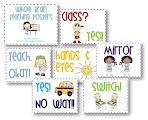
Three basic techniques in whole brain teaching

The class yes, the teach OK and the scoreboard


In an article which I wrote for ajarn.com I introduced a wonderful system of teaching called "Whole Brain Teaching" (WBT) in which I outlined the fundamental techniques it uses. For those of you who have not read the article, WBT is a pedagogical approach which is based on current research into brain activity and how we learn. Not specific but very applicable to EFL , WBT uses techniques which activate both hemispheres of the brain - thus it is a "Whole Brain" approach.
Traditionally education has focused on right brain activity - the reasoning, rational part of the brain. WBT techniques seek to make connections between this rational part of the brain and the left side of the brain which is concerned with creative activity . It is being proven more and more that an approach which integrates these two different activities of the brain leads to far more effective teaching. We will today look at three of the most basic techniques involved in WBT: "THE CLASS-YES", "THE TEACH-OK", and "THE SCOREBOARD". These are three amazingly simple techniques you can quickly learn and immediately use to greatly improve your effectiveness as a teacher.

Teachers' Gestures Boost Math Learning

Students perform better when their instructors use hand gestures -- a simple teaching tool that could yield benefits in higher-level math such as algebra.
A study published in Child Development, the top-ranked educational psychology journal, provides some of the strongest evidence yet that gesturing may have a unique effect on learning. Teachers in the United States tend to use gestures less than teachers in other countries.
"Gesturing can be a very beneficial tool that is completely free and easily employed in classrooms," said Kimberly Fenn, study co-author and assistant professor of psychology at Michigan State University. "And I think it can have long-lasting effects."
Fenn and Ryan Duffy of MSU and Susan Cook of the University of Iowa conducted an experiment with 184 second-, third- and fourth-graders in Michigan elementary classrooms.
Half ofthe students were shown videos of an instructor teaching math problems using only speech. The others were shown videos of the instructor teaching the same problems using both speech and gestures.
The problem involved mathematical equivalence (i.e., 4+5+7=__+7), which is known to be critical to later algebraic learning. In the speech-only videos, the instructor simply explains the problem. In the other videos, the instructor uses two hand gestures while speaking, using different hands to refer to the two sides of the equation.
Students who learned from the gesture videos performed better on a test given immediately afterward than those who learned from the speech-only video.
Another test was given 24 hours later, and the gesture students actually showed improvement in their performance while the speech-only students did not.
While previous research has shown the benefits of gestures in a one-on-one tutoring-style environment, the new study is the first to test the role of gestures in equivalence learning in a regular classroom.
The study also is the first to show that gestures can help students transfer learning to new contexts -- such as transferring the knowledge learned in an addition-based equation to a multiplication-based equation.
Fenn noted that U.S. students lag behind those in many other Western countries in math and have a particularly hard time mastering equivalence problems in early grades.
"So if we can help them grasp this foundational knowledge earlier," she said, "it will help them as they learn algebra and higher levels of mathematics."
 

Total Pageviews